Applied Cryptography Project Submission
From provable security to real-world projects.
Overview
Course Overview
Applied Cryptography explores the core theory of modern cryptography and how to apply these fundamental principles to build and analyze real-world secure systems.
The course’s website is at appliedcryptography.page.
Submissions Overview
This page contains the submission of Raphael Tannous.
Last Updated: Loading
Submission
Randomness & Time-Lock Encryption
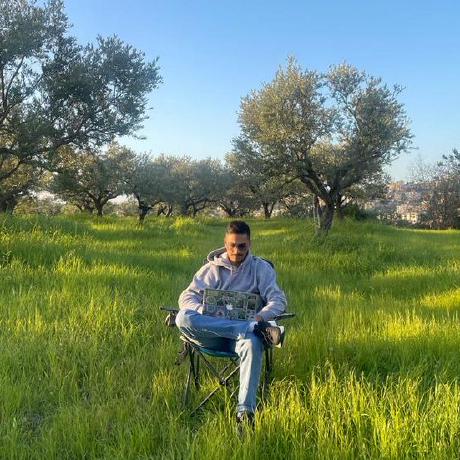
Raphael Tannous
Raphael is a Go developer who uses Arch Linux (btw!). He has a strong interest in cybersecurity and applied cryptography. He enjoys writing simple, non-bloated software
Website: https://riyt.dev
Linkedin: https://www.linkedin.com/in/raphaeltannous
Codeberg: https://codeberg.org/raphaeltannous
Project Part 1: On Randomness
Randomness plays an important role in modern cryptography and everyday life. Many systems rely on public randomness, but their randomness might contain some biases and you have to trust those systems that they are not altering the randomness.
In this part, I show how we can build a transparent LOTO system basing on the randomness provided by the League of Entropy’s drand network. The League of Entropy provides randomness that is unpredictable, publicly verifiable, bias-resistant, decentralized, and always available.
Article and Demo: goloto.appliedcryptography.me.
Source Code: codeberg.org/raphaeltannous/goLOTO.
Project Part 2: On Time-Lock Encryption
Time-lock encryption is possible because the League of Entropy is running an unchained network. We can use it where we encrypt towards the future using Identity Based Encryption, where the round is the identity, and the future signature is the private key. The network’s nodes become a Private key Generator (PKG) that relies on Threshold Cryptography, so no entity can know future signatures.
Article and Demo: gotimelock.appliedcryptography.me.
Source Code: codeberg.org/raphaeltannous/goTimelock.
The repository contains 3 applications:
- A command-line tool to encrypt/decrypt using the command line.
- A frontend application that uses WASM to encrypt/decrypt text and files.
- An automatic decryption system (Part 2.1).
Project Part 2.1: On Automatic Decryption
After creating encrypted files, we can create a system that automatically decrypts them by waiting for their round’s
signature to be published. The website uses Go’s time.Timer to wait for the correct round to decrypt the files and
publishes the encrypted and decrypted files for download.
Website: paste.appliedcryptography.me.
Source Code: codeberg.org/raphaeltannous/goTimelock/cmd/goTimeLockPaste.
Note: To fight spam, the backend uses API keys to authenticate users to upload encrypted files. The API keys are generated by me. If you want to test it, you can install the server and run it.
To generate API keys, I’ve written this script that you can use.
Thanks To
The Best Instructor in the World
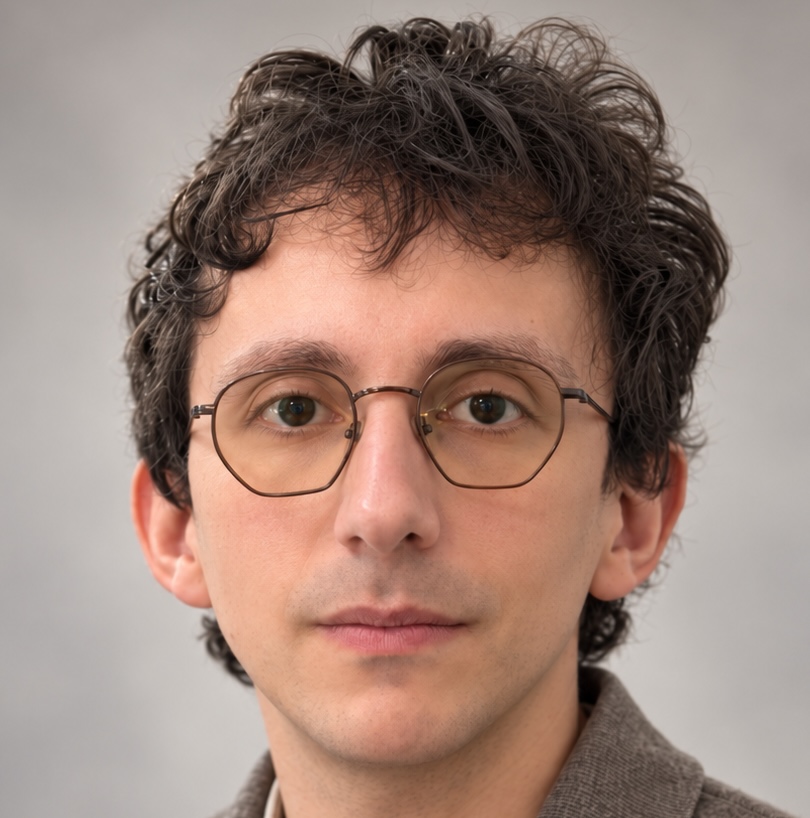
Dr. Nadim Kobeissi
Nadim Kobeissi is the founder of the Paris-based Symbolic Software, an independent applied cryptography lab with 300+ engagements for clients including Coinbase, Mozilla, and the Ethereum Foundation. He created the protocol modeling and verification engine Verifpal, teaches an Applied Cryptography course first offered at the American University of Beirut, and chairs Cedarcrypt, the Levant’s applied cryptography summer school and conference. He earned his Ph.D. at Inria Paris on formal verification of real-world cryptographic protocols, where he worked on some of the first formal verification efforts for smart contracts, Signal, TLS, and the Noise Protocol Framework. Nadim is also an active advocate for digital privacy rights and is recognized as a leading expert on end-to-end encrypted secure messaging.
If you are an honest seeker of an education in cryptography, especially from underprivileged circumstances in the Levant region, then take my hand, because I am your eternal ally, and we shall succeed in your quest for knowledge together!
The Best Teaching Assistants in the World

Faysal Elestwani
Faysal is a graduate student at the American University of Beirut, where he previously took the Applied Cryptography course.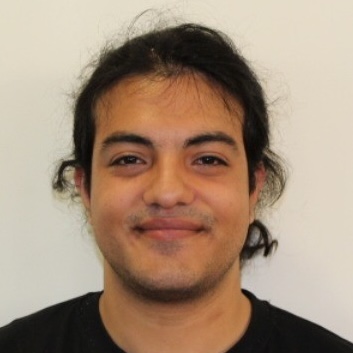
Abd El Kader Kahil
Abd El Kader is a graduate student at the American University of Beirut, where he previously took the Applied Cryptography course.